
India's energy resilience: Managing LPG stability amid global turbulenc
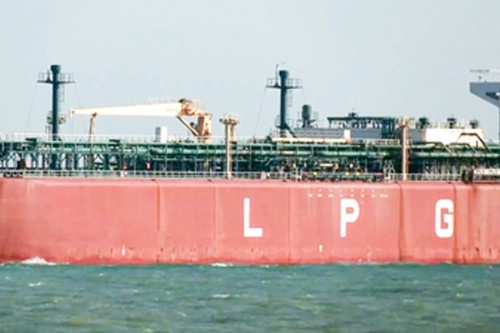
New Delhi, March 20 (IANS) The recent tensions in the Gulf region, particularly around the Strait of Hormuz, have once again exposed the fragility of global energy supply chains.
For a country like India — historically dependent on imported hydrocarbons — such disruptions inevitably trigger concerns about fuel shortages. In recent weeks, social media has amplified anxieties around LPG availability, with visuals of long queues and delayed deliveries circulating widely.
However, a closer and more grounded assessment reveals a very different reality: India’s energy architecture has evolved into a resilient, adaptive system capable of managing external shocks without compromising household needs.
At the heart of the current concern lies the Strait of Hormuz, a critical maritime chokepoint through which a significant portion of the world’s oil and liquefied petroleum gas (LPG) supplies transit. For India, which imports nearly 60–65 per cent of its LPG demand — most of it routed through this corridor — any disruption naturally raises alarms.
Yet, despite reduced shipping traffic and heightened geopolitical risks, India has managed to stabilise domestic LPG supply through a combination of proactive policy decisions, logistical agility, and strategic foresight.
One of the defining features of India’s response has been the clear prioritisation of household energy needs.
With over 33 crore domestic LPG connections and more than 300 million households dependent on cooking gas, ensuring uninterrupted supply is treated as a national priority.
The government moved swiftly to ring-fence household consumption, directing oil marketing companies to maintain uninterrupted supply for domestic users while managing temporary constraints for commercial sectors such as restaurants and hotels.
This calibrated approach ensured that while some visible disruptions appeared in commercial supply chains, household access remained largely unaffected.
Simultaneously, domestic production was ramped up to cushion the impact of import disruptions.
Refineries were instructed to divert hydrocarbon streams towards LPG production, resulting in a significant increase in domestic output.
State-level initiatives complemented this effort, with regions such as Maharashtra enhancing daily LPG production capacity. These measures reduced immediate dependence on imports and helped stabilise supply during the peak of the crisis.
Equally important has been India’s robust distribution infrastructure, built steadily over the past decade.
Today, the country operates one of the largest LPG ecosystems in the world, supported by an extensive network of bottling plants, storage depots, and over 25,000 distributors. This system, coupled with a national buffer stock capable of sustaining supply for over two weeks, ensures that even when shipments are delayed, distribution to households continues with minimal disruption.
Once incoming cargoes dock, the scale and efficiency of India’s bottling and logistics network enable rapid normalisation within days.
The role of public sector oil companies — Indian Oil, Bharat Petroleum, and Hindustan Petroleum — has been central to this effort. These companies maintain substantial operational inventories and possess the capability to rebalance supply across regions in real time.
Continuous monitoring of stock levels, tanker movements, and regional demand patterns has allowed them to address bottlenecks before they escalate into wider disruptions.
In parallel, the government deployed regulatory measures to prevent panic-driven distortions in the market.
By increasing the minimum interval between LPG refill bookings and invoking provisions under the Essential Commodities Act, authorities effectively curbed hoarding and black-market activities. Such interventions ensured that supply remained equitably distributed and that artificial shortages did not emerge due to panic buying.
India’s response has not been limited to domestic measures alone. Diplomatic engagement and maritime coordination have played a crucial role in maintaining the flow of energy imports. Under Operation Sankalp, the Indian Navy ensured the safe passage of merchant vessels in sensitive regions, while diplomatic channels facilitated the movement of LPG tankers through disrupted routes. As a result, several shipments have successfully reached Indian ports, further easing supply concerns.
What this episode also highlights is the importance of long-term structural reforms in strengthening energy security. Over the past decade, India has consciously diversified its sources of crude oil and LPG imports, expanding procurement beyond West Asia to include the United States, Russia, and parts of Africa. Strategic petroleum reserves have been developed to provide an additional buffer during emergencies, while investments in pipelines, LNG terminals, and city gas distribution networks are reducing dependence on coastal import infrastructure.
Simultaneously, initiatives such as the Pradhan Mantri Ujjwala Yojana have transformed India’s LPG landscape by expanding access to clean cooking fuel to over 10 crore beneficiaries. This expansion has not only improved social outcomes but also strengthened the last-mile delivery network, making the system more resilient in times of crisis.
Looking ahead, India’s energy strategy is increasingly aligned with diversification and sustainability. The expansion of renewable energy capacity—particularly solar and wind—along with experiments in electric cooking and bioenergy, is gradually reducing dependence on imported fossil fuels.
In a volatile geopolitical environment, resilience is no longer about insulation but about flexibility — the ability to adapt, reroute, and recover quickly from disruptions.
The real challenge in the current situation, however, lies not in supply but in perception. Viral images and isolated disruptions, particularly in commercial segments, have created an impression of widespread shortage.
In reality, the protected household supply chain has remained stable throughout. This underscores the need for responsible communication and reliance on verified information, especially during times of global uncertainty.
In conclusion, the recent LPG supply concerns serve as a stress test — one that India’s energy system has passed with considerable confidence. Through a combination of prioritised distribution, enhanced domestic production, strategic reserves, regulatory oversight, and international coordination, the country has ensured that millions of households continue to receive uninterrupted cooking gas.
As global shipping stabilises, remaining disruptions are expected to ease further. More importantly, this episode reaffirms that India’s energy security framework is no longer fragile — it is robust, responsive, and built to endure.

|

|