
Pakistan's crisis-ridden textile sector seeks Govt bailout
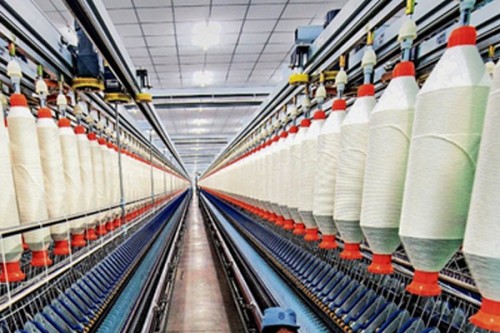
New Delhi, Jan 4 (IANS) Pakistan’s textile sector, which forms the backbone of the country’s exports and industrial employment, is on the brink of collapse with workers being laid off and factories being shut.
The Pakistan Textile Council has, in a letter to Prime Minister Shehbaz Sharif, urged the government to declare an “Export Emergency” to arrest the rapid erosion in competitiveness that now threatens exports, jobs, and macroeconomic stability, according to a report in Pakistan’s Business Recorder.
"The warning could not be timelier -- or more alarming. Pakistan’s exports declined by over 14 per cent year-on-year in November 2025, thus marking the fourth consecutive month of contraction. During the first five months of FY26, exports fell to $12.8bn from $13.7bn last year, while imports surged past the $28bn mark. The resulting trade deficit -- nearly $15.5bn in just five months -- underscores a dangerous imbalance. November alone recorded a deficit of $2.86bn, 33 per cent higher than a year ago," the report stated.
The report attributes the crisis to the fact that the cost structure of Pakistan’s textiles sector has become globally uncompetitive. Energy pricing disparities, inconsistent taxation, delayed refunds, and unpredictable policy signals have combined to squeeze margins to unsustainable levels. Competing textile exporters in Bangladesh, Vietnam, India, and even Sri Lanka operate with lower energy tariffs, stable tax regimes, and targeted export support, as per the report.
The textiles sector contributes over 60 per cent to Pakistan’s total exports and employs millions directly and indirectly. Every percentage point decline in textile exports has a multiplier effect -- shrinking foreign exchange earnings, weakening the rupee, raising inflationary pressures, and widening fiscal stress. In this context, the export slowdown is not a sectoral issue; it is a national economic risk, the report observed.
It also highlights the need for policy credibility. Exporters invest in long cycles — machinery, skills, market access — and cannot operate under constant regulatory uncertainty. Frequent changes in duties, tariffs, and incentives erode confidence and push buyers toward more reliable suppliers. Once lost, export markets are painfully slow to recover.
The report claims that Pakistan’s recent economic stabilisation efforts, largely shaped by IMF conditionalities, have prioritised demand compression and fiscal tightening for stabilising the economy. However, an economy of over 240 million people cannot stabilise itself into prosperity. Exports are not a luxury; they are the only sustainable exit from recurring crises, it added.

|

|