
At Norbulingka, colours of Tibetan art alive but thinning as youngsters drift away
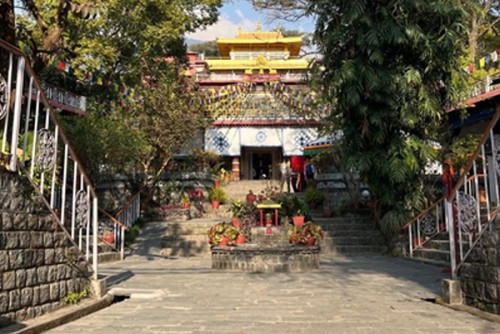
Dharamsala, Dec 18 (IANS) At the Norbulingka Institute, a significant centre of Tibetan Buddhist culture, identity, learning and craftsmanship located in the heart of Kangra Valley amidst the Himalayan landscape and once envisioned as a living canvas, the colours are alive, but quietly thinning with youngsters in exile drifting away.
Inaugurated by the Dalai Lama in 1995 as a unique sanctuary of thangka paintings, life-like metal religious sculptures and wood carvings where chisels, hammers, looms and brushes would converse with centuries of Tibetan arts and crafts, Norbulingka, a school where the art is taught in both literary and artistic forms under the guidance of talented masters, now finds its stream of young artisans running shallow.
Workshops meant to echo with the rhythm of carving, and the hush of sacred thangka lines, are witnessing fewer apprentices, as the next generation drifts away from patient craft to faster, shinier worlds.
What was conceived as a continuum, hands learning from hands of skilled masters of many different crafts, memory passing through muscle and mind, now risks becoming a gallery of preservation rather than a workshop of renewal, with the art still radiant globally, but the artists-in-waiting increasingly absent.
The Norbulingka Institute, which began to take shape in 1984, amidst the backdrop of the snow-capped Dhauladhar peaks, has been named after the 14th Dalai Lama’s summer palace, a UNESCO World Heritage site in Lhasa in Tibet.
The Dalai Lama has provided funds for the initial land purchase. He visited Norbulingka Institute on several occasions to see the Tibetan spirit in action, most recently on March 9, 2017, to mark its 21st anniversary and to view a set of 25 thangkas depicting the lives of all 14 Dalai Lamas and their predecessors. The project of 25 thangkas, which took almost 15 years to make, began with Norbulingka’s first painting master, 'Tenba Chophel'. During their visit in 2017, the founders of the institute -- Kasur Kalsang Yeshi and Kim Yeshi -- along with senior members of staff paid respects to His Holiness with prayers for his long life recited.
The Dalai Lama set up his base in McLeodganj in early 1960, a small and quaint hill station in the suburbs of Dharamsala, where the exile administration is based. He became Chairman of the Norbulingka Trust in 1996, retaining this position till he devolved his political responsibilities to an elected head.
After the Dalai Lama fled to India following the 1959 failed uprising against Chinese rule, he has frequently stressed the need to safeguard Tibetan culture. And Norbulingka is one of them, dedicated to adapting authentic traditions through self-sustaining means by selling thangka paintings, besides metal Buddhist deities, which the followers believe come to life when they are consecrated by lamas through a ritual, home furnishings, brocade tapestries depicting embroidered images and traditional clothes -- stitching a culture together.
Located in Sidhpur in Kangra district of Himachal Pradesh, with a famed street draped in prayer flags with bowls of steaming thukpa and delicate dumplings, a visit to Norbulingka Institute takes one closer to historical and cultural heritage preserved with nature blending harmoniously.
Norbulingka’s Managing Director, Tsering Phuntsok, told IANS the institute has been playing a crucial role in taking the Tibetan culture to the world over. For refugees, it’s a pathway to earn a livelihood after passing a course that ranges up to six years, besides a pilgrimage of the spirit and preservation of culture and traditions.
The institute supports nearly 300 craftspeople, largely middle-aged, with a few who prefer to don the traditional dress, the chuba, through fundraising and self-sustaining means.
Phuntsok explained to IANS that each thangka, depicting deities, mandalas, and Buddhist teachings with vibrant colours, is a blend of hand-stitched brocades, assembled into patterns on pure silk cloth.
Ceremonial thangkas can be as much as six feet high, requiring at least six months of painstaking work with patience and skill of a pair of hands. On average, the institute gets 9,000 visitors, comprising foreigners, per month, with a nominal entry ticket of Rs 50. The workshops are closed on Sundays.
Citing the reason for not attracting the young stream of Tibetans in the Tibetan arts, Phuntsok said a majority of young people born in India discover employment opportunities in cities and metros after completing their school or college-level studies.
“Since most of our texts are in the Tibetan language, the young ones cannot read them, and they prefer skills other than traditional arts,” he said.
A majority of thangka paintings, a medium for spiritual practice and aiming to inspire meditation and enlightenment, are much in demand in Southeast Asian countries like Thailand, Myanmar, Cambodia, Vietnam, Magnolia, etc.
In Norbulingka, Ngodup Tsering is a master wood painter and like his father and grandfather, he learned the art of painting as a child. Following his heritage, he has been giving training to students for three decades.
The decorative art with auspicious symbols of good luck draws students mainly from the Indian Himalayan states. “Now we use a syringe to apply a mixture of paint and carpenter’s glue, and this technique requires an extremely steady hand, which takes months to develop,” Tsering told IANS.
Tenzin Kunga is doing woodcarving, a tradition that dates to the seventh century, and is appearing in the crossbeams of houses, door and window frames. After completing three years of course, Kunga, 23, is doing a job in Norbulingka.
For those who wish to learn the art of wood painting and carving, Norbulingka offers workshops, ranging from a day to months. Courses are designed based on the time and interests of individuals and groups.

|

|